
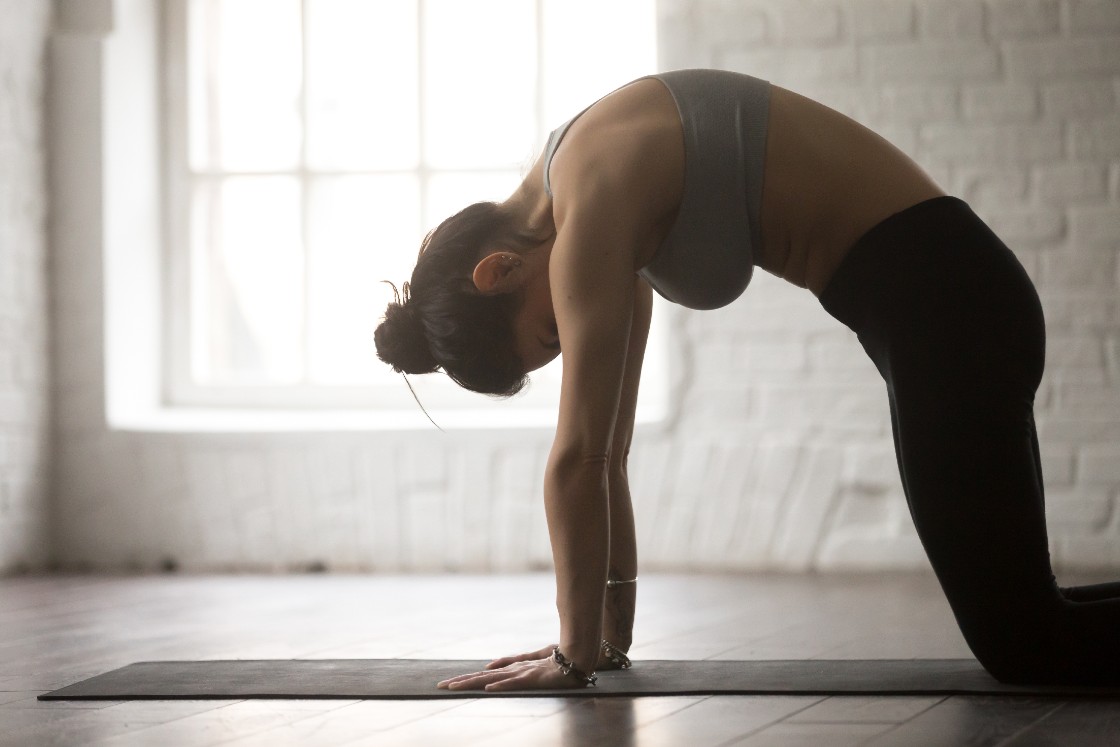
| Sanskrit Pronunciation | Mar-jaree-asana (Marjariasana), मार्जरीआसन |
| Meaning | Marjaree – cat Asana – Pose |
| Known as | Marjaryasana, Viralasana, Billiasana |
| Pose Type | Forward bend, kneeling pose |
| Pose Level | Beginner |
| Beneficial In | Increasing flexibility and strength of spine and core |
Many yoga poses are inspired by the natural movements of animals, especially how they stretch and protect their spine. Cat Pose (Marjariasana) is one such pose, based on the way a cat gently rounds its back while stretching.
A cat’s spine is naturally flexible and moves smoothly with breath. Cat Pose brings this same idea into yoga, helping the human spine move freely and release stiffness. Even a small amount of this movement can greatly improve spinal comfort and mobility.
Marjariasana, also known as Cat Pose, is a simple forward-kneeling yoga posture. It is mainly practised as a warm-up and is often paired with Cow Pose to prepare the body for deeper and more intense yoga practices.
In Cat Pose, the spine is rounded gently from the neck to the lower back. This movement activates the core and spinal muscles, improves flexibility, and helps release tension from the back. The body shape in this pose closely resembles a stretching cat, which is why it gets its name.
Although Cat Pose is not described in ancient yogic texts, it has become an important part of modern yoga due to its physical and therapeutic benefits-especially for people with a stiff back or sedentary lifestyle.
Cat Pose (Marjariasana) is a beginner-friendly, forward-kneeling yoga posture practised on the hands and knees. It involves gently rounding the spine with the breath to improve spinal mobility, activate the core muscles, and release tension from the back and neck.
How to do cat pose (Marjariasana) – steps
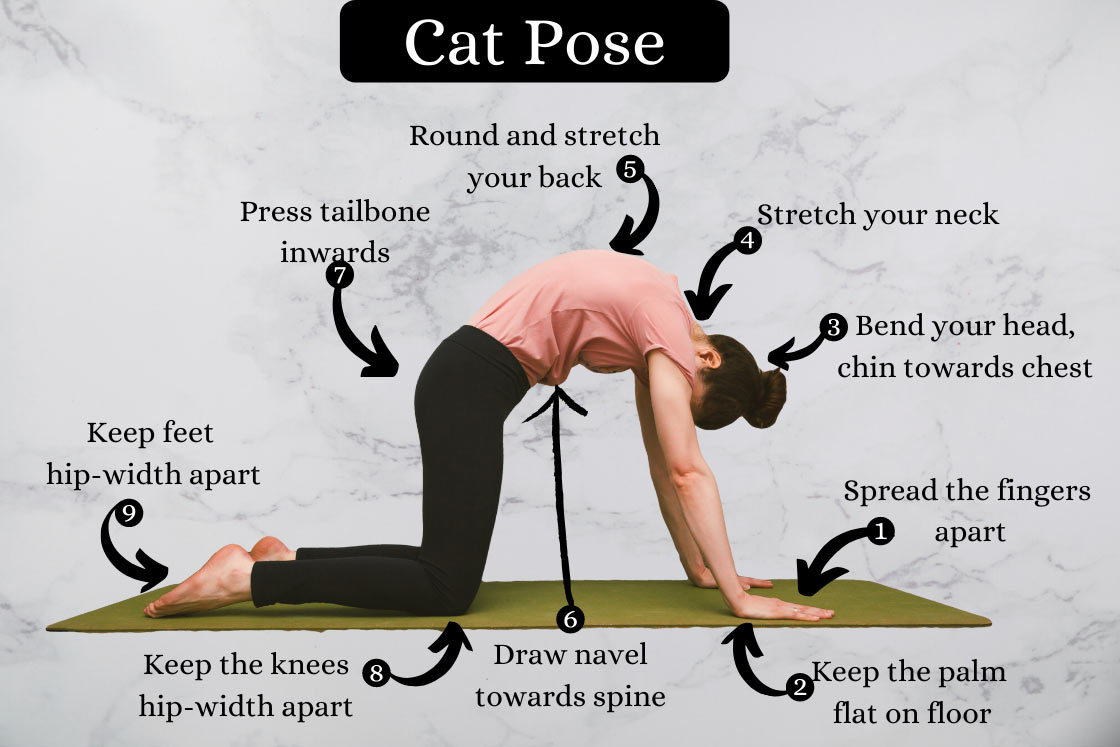
Cat Pose is practised from the tabletop position by gently rounding the spine with the breath.
- Come onto your hands and knees, keeping your spine straight and neutral.
- Place your wrists directly under your shoulders and your knees under your hips. Spread your fingers evenly on the floor.
- Keep your feet hip-width apart and distribute your body weight equally between your hands and knees. This is the tabletop position.
- Take a few relaxed breaths here and keep your back flat.
- Exhale slowly and round your spine upwards, gently tucking the tailbone down.
- Drop your head naturally and bring your chin towards your chest without forcing it.
- Hold this position for 10–15 seconds while breathing slowly and evenly.
- Inhale and return to the tabletop position. This completes one round.
- Repeat the movement for 5–7 rounds, according to your comfort.
- After finishing, stay in the tabletop position for a few breaths.
- Slowly come back to your knees, sit on your heels in Vajrasana, stretch your legs forward, and relax.
Cat and cow pose variation
Cat Pose is commonly practised along with Cow Pose. In this variation, Cow Pose is done first and then followed by Cat Pose. This flowing movement increases the overall effect of Cat Pose on the spine and muscles.

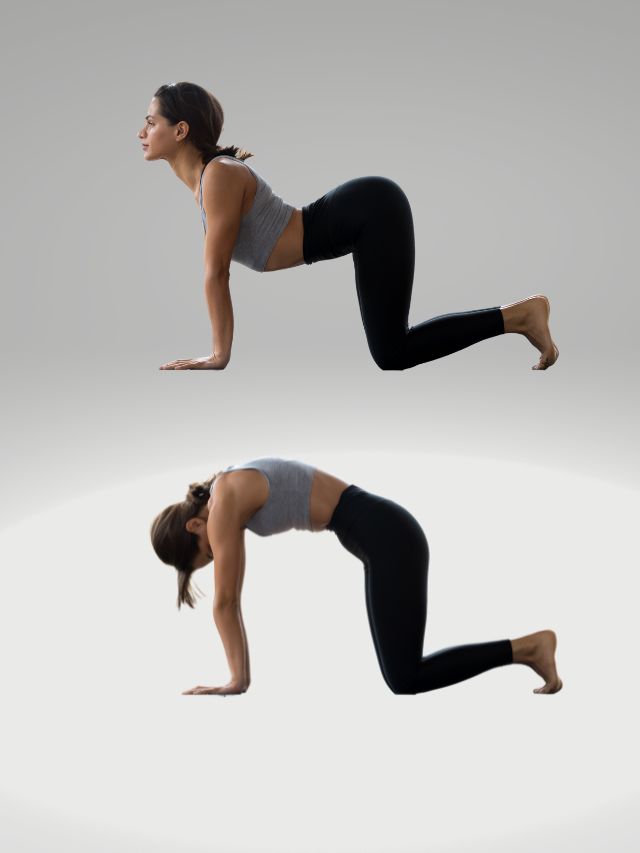
- Come into the tabletop position, as you do for Cat Pose.
- Inhale and gently drop your belly down, lifting the tailbone and chest towards the ceiling. Stretch the neck, tilt the head back, and look upwards. This is Cow Pose.
- Hold the pose for 10–15 seconds while breathing deeply.
- Exhale slowly and move into Cat Pose by rounding your back and bringing the chin towards the chest.
- Hold Cat Pose for 10–15 seconds with steady breathing.
- Repeat this flow for 5–6 rounds of both poses.
Beginners tips
- Beginners can place a folded blanket under the knees for better comfort and support.
- In the beginning, it is usually easy to round the middle back, but rounding the upper back may feel difficult.
- As it can be hard to focus on the upper back at first, you can ask someone to gently place their hands between your shoulder blades. This helps you bring better awareness to the upper back movement.
Precautions and contraindications
- Practise Cat Pose on an empty stomach or at least 4–6 hours after eating to avoid discomfort.
- While rounding the spine, do not force the chin towards the chest. Move only within a comfortable range.
- Keep both palms flat on the floor and spread the fingers evenly. Avoid lifting the knuckles or the centre of the palm.
- Do not practise Cat Pose if you have a recent, severe, or untreated injury to the spine, neck, knees, or wrists, as it may increase pain.
- People suffering from arthritis in the knees or wrists should avoid this pose or practise only under expert guidance.
Cat Pose(Marjariasana) Benefits
Cat Pose may look simple, but its slow and controlled movement offers deep benefits for the body and mind. By gently rounding the spine with the breath, this pose helps improve flexibility, release tension, and support overall spinal health.
- Improves spinal flexibility: Rounding the spine in Cat Pose gently stretches each vertebra. This movement reduces stiffness and keeps the spine flexible and healthy.
- Strengthens core muscles: Pulling the belly towards the spine during the pose activates the core. This helps tone the abdominal muscles and supports better posture.
- Relieves back and neck tension: The stretch from the neck to the lower back releases tight muscles. This is helpful for people with a stiff, sore, or tired back..
- Tones shoulders and neck: Rounding the upper body stretches the shoulder and neck muscles. Regular practice improves movement and flexibility in these areas.
- Supports digestive health: Gentle compression and release of the abdomen massages the digestive organs. This supports digestion and improves metabolism.
- Improves breathing and lung function: Breathing deeply while moving the spine helps expand the diaphragm. This improves lung capacity and supports heart health.
- Calms the mind and reduces stress: Slow movement combined with steady breathing relaxes the nervous system. This helps reduce stress and brings mental calmness.
Conclusion
Cat Pose (Marjariasana) is a simple yet effective yoga asana that gently stretches and strengthens the spine. When practised with mindful breathing, it helps reduce stiffness, improve posture, and calm the mind. Regular practice makes the body more flexible and relaxed, making it a valuable pose for beginners and experienced practitioners alike.
FAQs on Cat pose (Marjariasana)
1. How long should Cat Pose be held?
Cat Pose is usually held for 10–15 seconds per round, with smooth and relaxed breathing.
2. Can Cat Pose be done alone without Cow Pose?
Yes, Cat Pose can be practised on its own, especially to release back tension, though it is often paired with Cow Pose for better spinal movement.
3. Is Cat Pose helpful for morning stiffness?
Yes, Cat Pose is very effective in reducing morning stiffness in the spine and back.
4. Can Cat Pose help improve posture?
Yes, regular practice strengthens the core and spinal muscles, which helps support better posture.
5. Is Cat Pose safe for older adults?
Yes, Cat Pose is generally safe for older adults when done slowly and within a comfortable range of motion.
6. Can Cat Pose be practised before meditation or pranayama?
Yes, it is a good preparatory pose as it relaxes the spine and calms the body before seated practices.
7. Does Cat Pose help with stress and anxiety?
Yes, the slow movement combined with deep breathing helps calm the nervous system and reduce stress.