As told to Jacquelyne Froeber
Growing up, I got my yearly physical at school just like all my other classmates. It was the same drill every time: The doctor checked your spine for scoliosis, listened to your heart for problems and then sent you on your way.
But my first year of junior high was different. The doctor pressed the stethoscope to my chest and froze. He murmured something I couldn’t understand and told the nurse to send the other kids into the hallway.
“She’s like the one outside,” he said. I had no idea what he meant, but years later, I learned the memorial stone in front of the middle school was for a 13-year-old girl who died from sudden cardiac arrest. The one outside.
The doctor called my mother to tell her I couldn’t go back to class without getting the OK from a cardiologist.
Since not going to school was not an option, my mom made an appointment, and a few days later I was diagnosed with hypertrophic cardiomyopathy (HCM) — a genetic heart condition that thickens the heart muscle and can cause sudden cardiac death and heart failure over time. This type of heart disease can happen at any age, and most people are diagnosed in midlife, but I was much younger.
Despite the seemingly serious diagnosis, I didn’t really know what to make of the news. I was told I couldn’t play school sports anymore, but other than that, not much changed.
My family didn’t discuss health problems or health history. Even though my grandfather had passed away from HCM, my uncle had HCM and my older sister Lori Anne was diagnosed with HCM a few years before I was, no one talked about it. My mom didn’t want us to be labeled as “sick kids,” so we weren’t sick kids.
Chest pain and shortness of breath followed me into my 20s, but no one really knew I had a heart condition unless I brought it up. I married my high school sweetheart, got a job in human resources and health plan administration, and life went on.
Then, about 10 years after I was diagnosed, I had a stroke.
I’d just gotten back from my honeymoon when a blinding headache and numb left arm convinced me to go to the emergency room. I’d been living with migraine attacks for years, but I knew something was very wrong this time.
Still, when the doctors told me I’d had a stroke, I was stunned. I was only 21 years old. The gravity of having HCM started to sink in. Two years after the stroke, I had my first pacemaker put in to help my heart pump blood to the rest of my body.
My husband was very supportive about my heart condition, but I leaned on my sister a lot. Lori was the only person I knew who had HCM, and there wasn’t a lot of information out there in the ’90s. We talked about starting a support group, but where would we even start?
Lori was always advocating for our health, but I’d started noticing her hair was falling out and her weight was fluctuating.
“You’d better take care of yourself,” I told her. But I knew she was going to her doctor’s appointments and having her heart checked, so I wasn’t too worried. Plus, I was pregnant and worried about my own health.
Not long after our conversation, Lori had a cardiac arrest. She was on life support for five days before she passed away and became an organ donor. She was 36 years old.
The loss of my sister was so shocking, I couldn’t comprehend it. The questions played on a loop in my brain: How? Why? What happened? But the person I always looked to for guidance could no longer help me. I was eight months pregnant and about to be a caregiver for my sister’s two kids, and I didn’t have any answers. I felt alone.
A combination of medical errors and overall mismanagement of HCM led to my sister’s death, and I was angry. I knew the only way I could move forward was to raise awareness about the disease and help other people’s sisters not die from HCM.
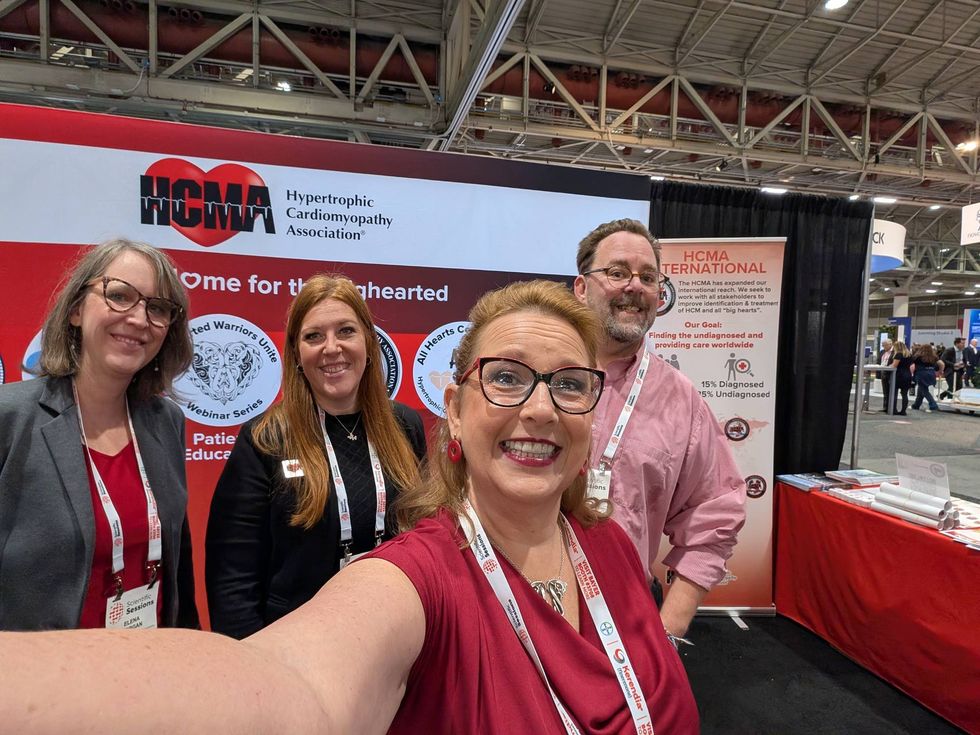

I started a web page through an online support group and quickly found that there were a lot of people looking for information and someone to talk to about HCM. Within a year, we turned the support group into a nonprofit organization called the Hypertrophic Cardiomyopathy Association (HCMA).
As founder and CEO of HCMA, increasing awareness and advocating for people with HCM became my full-time job.
In 2016, I was getting ready for a meeting at the White House on the state of cardiovascular health in America when my heart had other plans. I felt my heart do things it had never done before. I’d been on steroids for a back issue, and that may have been too much for my heart. After 47 years and five devices, I needed a heart transplant. About 1 in 250 people have HCM and I was part of the 5% of those that need a transplant.
It’s hard to describe the weight of reality when you’re on a donor list. Every day, I was actively dying, but the pump in my heart was keeping me alive.
Physically, I went from being a very active person and going into the office every day to not being able to walk down the stairs or get the mail without being completely drained.
Mentally, I was trying to stay sane with the knowledge that if I didn’t get a new heart, I was going to die.
Then, on Groundhog Day — 71 days after being put on the list — my phone rang.
They had a heart for me.
“Please don’t let this be like the Groundhog Day movie,” I said to the person on the phone.
Thankfully, it was real. I went to the hospital that night and got a new, beautiful heart put into my chest.
Today, I feel fantastic, and I’m so grateful to Brandy, the organ donor who gave me my new heart. And I’m grateful for the advancements in medicine that allowed my original heart to get me here.
I want everyone to know that people don’t have to die from this disease. We can live and thrive with HCM. There are new medications on the market, newer and safer surgical procedures and devices, and defibrillators to protect against sudden cardiac arrest. And we can use a whole host of tools to improve quality of life — but we have to talk about our family history of heart health symptoms (chest pain, shortness of breath, palpation, fainting or nearly fainting) and we have to know which families to screen. Early diagnosis and treatment are crucial to preventing and recognizing complications of HCM.
That little girl that I was pregnant with when my sister died has HCM, and so do my niece, nephew and other family members. It’s my mission to do whatever I can with the time I have to make the world better for them and for everybody else with big hearts.
Resources
Hypertrophic Cardiomyopathy Association
This educational resource was created with support from Edwards Lifesciences, a HealthyWomen Corporate Advisory Council member.
Have your own Real Women, Real Stories you want to share? Let us know.
Our Real Women, Real Stories are the authentic experiences of real-life women. The views, opinions and experiences shared in these stories are not endorsed by HealthyWomen and do not necessarily reflect the official policy or position of HealthyWomen.
From Your Site Articles
Related Articles Around the Web