
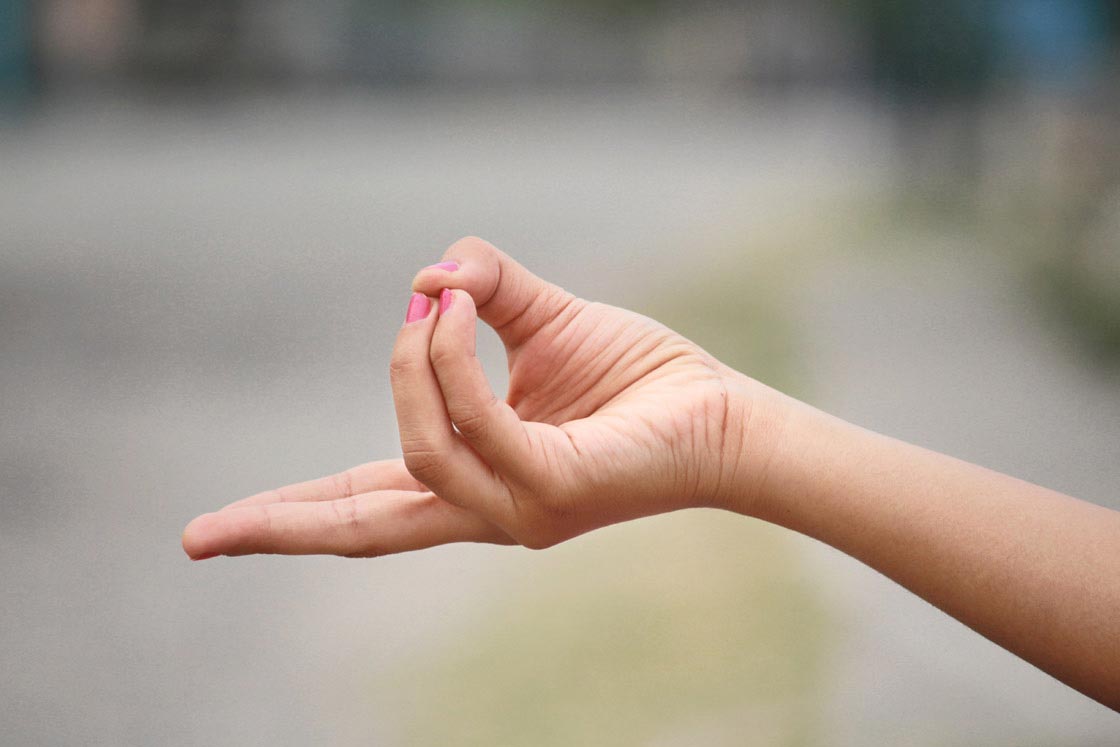
Prana Mudra is a simple hand gesture used in yoga and meditation to support the flow of prana the body’s vital life force.
In Sanskrit, prana means life energy and mudra means gesture or seal. When practiced regularly, this mudra is believed to help awaken dormant energy in the body and improve overall vitality.
The gesture is easy to form. You simply touch the tips of the thumb, ring finger, and little finger together, while keeping the other two fingers extended. Despite its simplicity, it is considered one of the most widely practiced mudras in yoga.
Despite its simplicity, this mudra is considered an important gesture in yogic practice. It is traditionally associated with improving the flow of prana in the body and supporting overall vitality and mental clarity when practiced regularly.
Prana Mudra is also called:
- Pitta Nashak Mudra — because it balances excess Pitta/fire energy
- Kapha Karak Mudra — because it increases the Kapha element
Prana mudra and the five elements

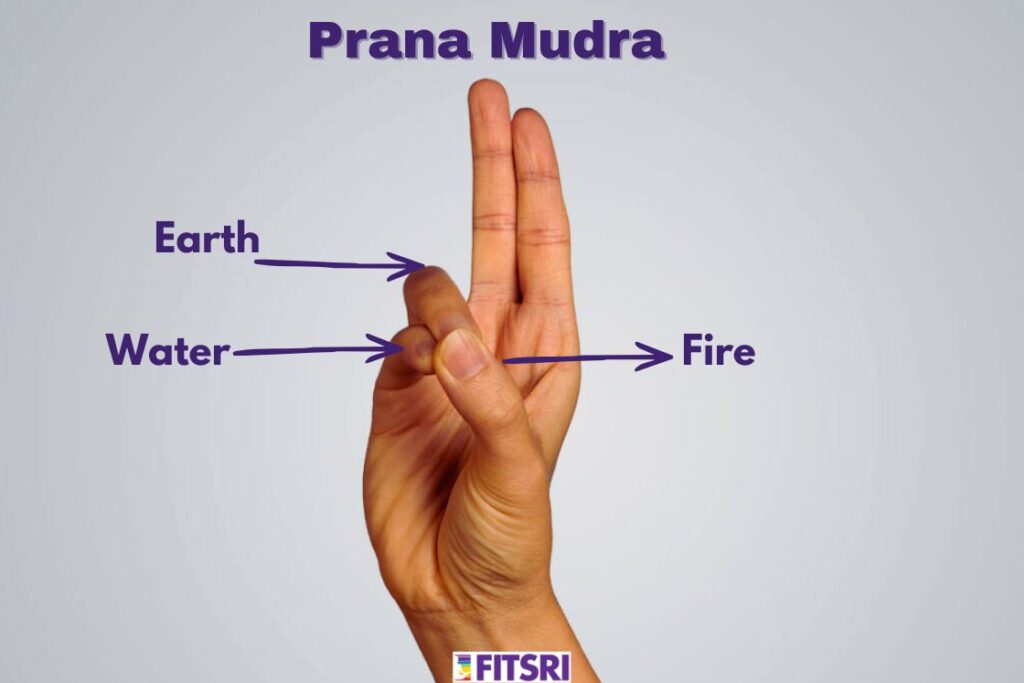
In yoga and Ayurveda, the body is governed by five elements : earth, water, fire, air, and ether- each represented by a finger. Balance among these elements is considered the foundation of good health.
Prana Mudra specifically works with three elements:
| Finger | Element | Quality |
|---|---|---|
| Thumb | Fire (Agni) | Vigor, transformation |
| Ring finger | Earth (Prithvi) | Stability, structure |
| Little finger | Water (Jala) | Fluidity, circulation |
When these three fingertips meet, the earth and water elements combine and interact with the fire element. According to yogic theory, this gives rise to Prana Shakti, a surge of life-force energy believed to support vitality and circulation.
This same combination is why Prana Mudra is also called Kapha Karak Mudra: in Ayurveda, earth and water together form the Kapha dosha. And because the fire element is also involved, it simultaneously helps cool and balance excess Pitta (fire), making this mudra a uniquely well-rounded practice. Because the fire element is also involved, some yoga therapy traditions consider this mudra helpful in balancing excess Pitta energy.
How to do prana mudra(Steps)
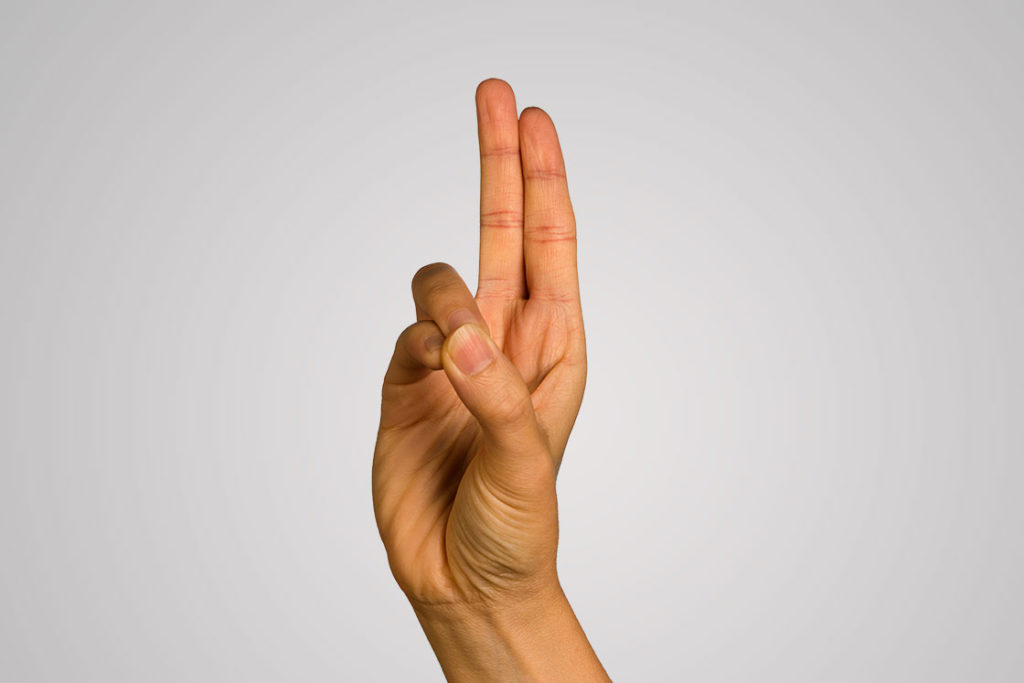
What you need: A quiet space, comfortable seating, and 15–45 minutes.
- Sit comfortably. Choose a meditative posture such as Padmasana (Lotus Pose), Siddhasana, Vajrasana, or Sukhasana..
- Relax and settle. Close your eyes gently. Take 5–10 deep, natural breaths. Let your shoulders drop and your jaw soften. Feel the breath entering and leaving through your nostrils.
- Form the mudra. On both hands simultaneously, bend your ring finger and little finger toward the thumb. Press the tips of these three fingers together with gentle, even pressure — not tight or strained.
- Extend the remaining fingers. Let your index and middle fingers rest straight and lightly stretched. They don’t need to be rigid, just relaxed and open.
- Rest your hands. Place both hands on your thighs or knees, palms facing upward or resting naturally.
- Hold and breathe. Maintain the position for 15–45 minutes. Keep your breath slow and natural. If the mind wanders, gently return attention to the breath.
- Release with awareness. When finished, gently uncurl your fingers, stretch them naturally, and rest for a moment before opening your eyes.
Tip: You can chant “So” on the inhale and “Hum” on the exhale to deepen concentration during practice.
Time & Duration
- Ideal time: While Prana Mudra can be practiced at any time of the day, many teachers recommend practicing it in the morning when the mind is calm and fresh.
- Duration: 15 to 45 minutes per session
- Frequency: Daily practice brings the best results
Precautions
- Practice with gentle finger contact. Avoid pressing the fingers too hard or creating tension in the hands.
- It is generally more comfortable to practice on an empty stomach or at least 30 minutes after a meal.
- Maintain a relaxed posture and natural breathing while holding the mudra.
- People with high blood pressure or other chronic medical conditions should practice under the guidance of a qualified yoga teacher or healthcare professional.
- Pregnant women should consult a qualified instructor before starting any new yoga practice.
- If you have recently undergone surgery or have a serious medical condition, consult your doctor before adding mudra practices to your routine.
Side Effects
However Prana mudra is beneficial in all ways, but practicing it excessively and wrong time may bring following effects;
- Increases obesity – Ayurveda tells about three Prakriti – Vatta, Pitta, and Kapha. Prana mudra increases the Kapha element and slows down the fire element, which may result in increased body weight if practiced for long durations at one sitting.
- Beginners may occasionally feel tingling in the fingers, which is normal.
- Very long sessions may cause mild restlessness or heat in the body in sensitive individuals.
Prana mudra with pranayama (advanced practice)

For practitioners looking to go deeper, Prana Mudra can be combined with breath and visualization to draw pranic energy upward through the chakras. This version is sometimes called Prana Mudra Pranayama or a kaya mudra (postural gesture) because it engages the entire body, not just the hands.
- Sit with both hands in Prana Mudra position.
- Without straining the chest muscles, inhale and exhale deeply for a few rounds. At the end of complete exhalation, perform the Mula Bandha by concentrating on the root chakra.
- Try to keep the air outside as long as you are comfortable and then slowly release the Mula bandha.
- Now, gently start inhaling as deep as possible while expanding the chest to allowing the lungs to fill with fresh air.
- Coordinate your abdominal inhalation movement with the lifting of hands in [prana mudra] slowly from kneecap to the navel region. With this movement of hands, visualize the flow of prana from the Muladhara chakra to Manipura Chakra.
- In the next inhalation, expand your chest further with upward movement of hands till they reach in front of the center of your chest. Here try to feel the flow of prana Vayu from Manipura Chakra to the Heart Chakra.
- Now draw furthermore air into the chest by raising the shoulder and collarbones in the next inhalation. While raising shoulders, feel prana is moving from Heart to Throat Chakra followed by Ajna Chakra and finally reaching to Sahasrara chakra.
- Concentrate on the Sahasrara Chakra and with closed eyes, visualize the pure light eliminating from the crown of the head. Be in this stage for as long as you are comfortable with the breath held inside and then gently start exhaling. (keeping your lips closed).
This practice of prana mudra with breath awareness and concentration utilize the complete physical posture, hence it’s called kaya mudra (postural gesture) rather than just a simple hasta mudra.
Prana mudra benefits
Prana Mudra is traditionally practiced to improve the flow of prana (vital life energy) in the body. When practiced regularly with meditation or breathing exercises, it may support both physical vitality and mental balance.
Below are some commonly described benefits of prana mudra.
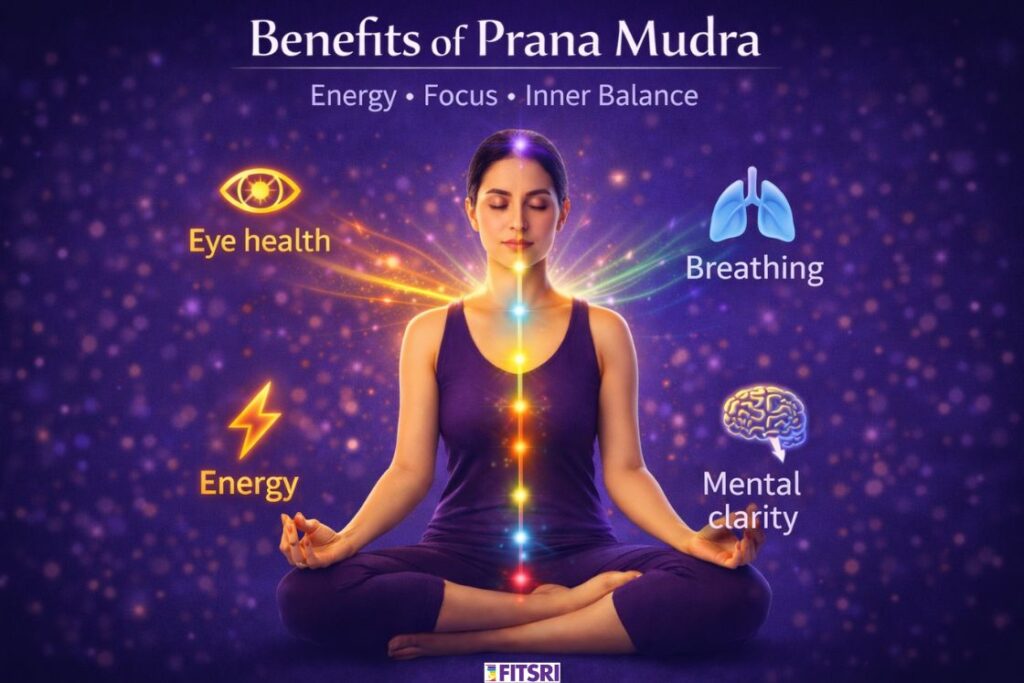
- Activates the pranic energy – The primary purpose of Prana Mudra is to stimulate the flow of prana in the body. In yogic philosophy, this life force is connected with overall vitality and inner balance.
- Helps reduce fatigue and weakness – Regular practice of Prana Mudra may help people who experience tiredness, low stamina, or general weakness. Many practitioners report feeling more energetic after practicing this mudra during meditation.
- Supports eye health – Prana Mudra is often recommended in yoga therapy practices for maintaining healthy eyesight. It may help reduce eye strain, dryness, and fatigue caused by long hours of screen use.
- Encourages better breathing – Because this mudra is frequently practiced along with pranayama, it may help improve breathing awareness and support healthy lung function.
- May strengthen hair roots – According to yogic theory, the ring finger represents the earth element, which is associated with physical structure. Activating this element through Prana Mudra is traditionally believed to support stronger hair roots and healthy hair growth.
- Supports healthy circulation – Prana Mudra may help support natural blood circulation and energy flow in the body, which can contribute to improved vitality.
- Calms the mind – Practicing this mudra during meditation encourages slow breathing and relaxation. This can help quiet mental restlessness and promote a sense of calm.
- May help reduce negative thinking patterns. – Regular meditation with Prana Mudra may help stabilize emotions and reduce negative thinking patterns.
- Improves focus and concentration – Many meditation practitioners use Prana Mudra to deepen awareness and concentration during breathing practices.
Conclusion
Prana Mudra is one of those rare practices that is simple enough for a complete beginner and deep enough for an experienced yogi. A few minutes a day ideally at sunrise, in a comfortable seated position can meaningfully shift how your body and mind feel over time.
The gesture itself is easy: little finger, ring finger, and thumb tips together; index and middle fingers extended. The real work is the consistency.
If you’re new to mudra practice, this is one of the best places to start.
Always practice mudras as a complement to not a replacement for medical care. If you have a serious health condition, consult a qualified healthcare professional or experienced yoga teacher before beginning.
FAQs
Most yoga teachers recommend practicing Prana Mudra for 15 to 30 minutes a day. Beginners can start with 10 minutes and gradually increase the duration. It can be practiced in one session or divided into shorter periods during meditation, pranayama, or quiet sitting.
Prana Mudra can be practiced one to three times a day depending on your routine. Many practitioners prefer practicing it during morning meditation, while others repeat it in the evening for relaxation and energy balance.
Yes, Prana Mudra is one of the easiest yoga mudras for beginners. It does not require flexibility, special training, or equipment. Anyone can practice it while sitting comfortably during meditation, breathing exercises, or quiet relaxation.
Yes, Prana Mudra is commonly practiced during meditation and pranayama. Holding the mudra while focusing on the breath can help improve concentration and create a calm, steady state of mind.
Yes, Prana Mudra is often combined with other therapeutic mudras. Some yoga teachers recommend practicing it before other mudras to help activate pranic energy and improve the overall effect of mudra practice.
Some people notice a sense of calm or improved energy within a few days of regular practice. However, deeper benefits are usually experienced after several weeks of consistent practice, especially when combined with meditation or breathing exercises.
Prana Mudra is most effective when practiced in a comfortable seated meditation posture with a straight spine. However, if sitting is difficult, it can also be practiced while lying down or during quiet relaxation.