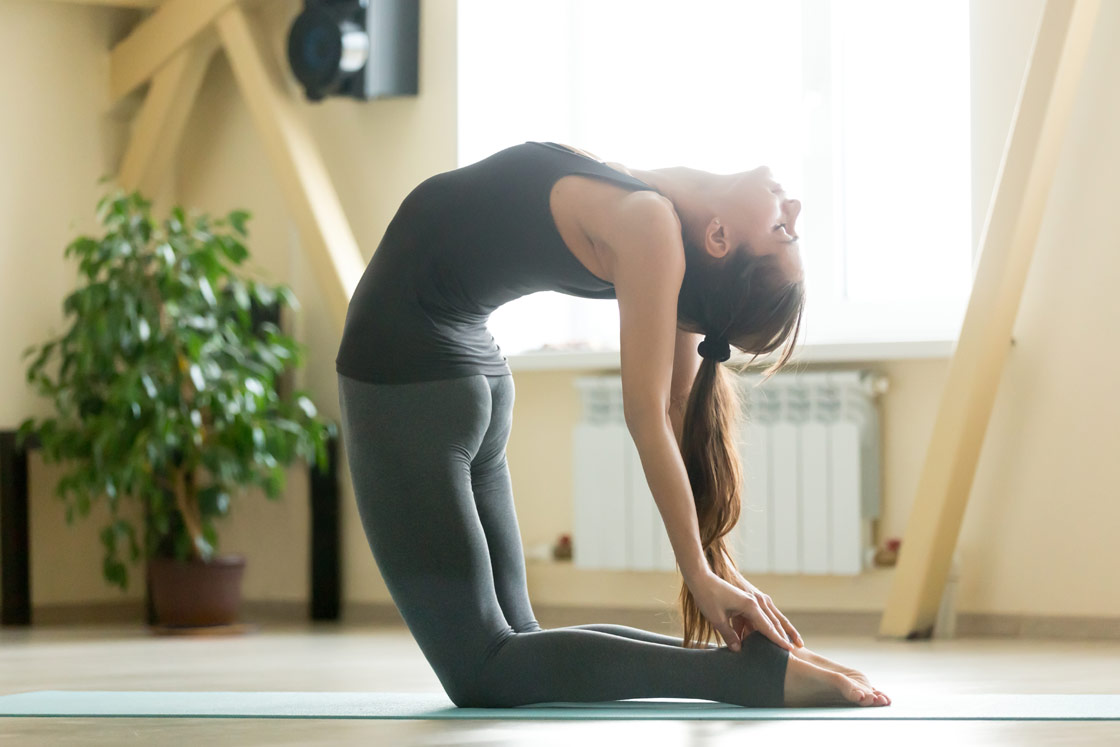
| Sanskrit Pronunciation | Ustrasana OOS-tra-AHS-anah |
| Meaning | Ustra = camel / Asana = pose |
| Pose Type | Kneeling backbend |
| Pose Level | Intermediate |
| Primary Muscles Used | Spine, quadriceps, hip flexors, core muscles |
| Joint Involvement | Spine, hips, knees, shoulders |
| Chakra Activation | Heart Chakra (Anahata) (also influences Throat and Solar Plexus Chakras) Main Benefits |
Camel Pose (Ustrasana) is a popular kneeling backbend in yoga that helps open the chest, stretch the front body, and improve posture. It is an intermediate-level pose, mainly practised to build spinal flexibility, strengthen the thighs and core, and boost energy levels.
People often search for Camel Pose to understand how it helps back pain, posture, digestion, and emotional balance. This pose deeply stretches the chest, abdomen, hips, and thighs while strengthening the spine and supporting muscles. Because of its strong heart-opening action, Ustrasana is also known for stimulating the Heart Chakra, which is linked to emotions like openness, confidence, and inner calm.
Camel Pose is commonly included in Hatha Yoga, Vinyasa Yoga, and Bikram Yoga sequences. While it offers many benefits, it should be practised with proper alignment and awareness, especially by people with back, neck, or knee issues.
How to do Camel Pose(Ustrasana) steps
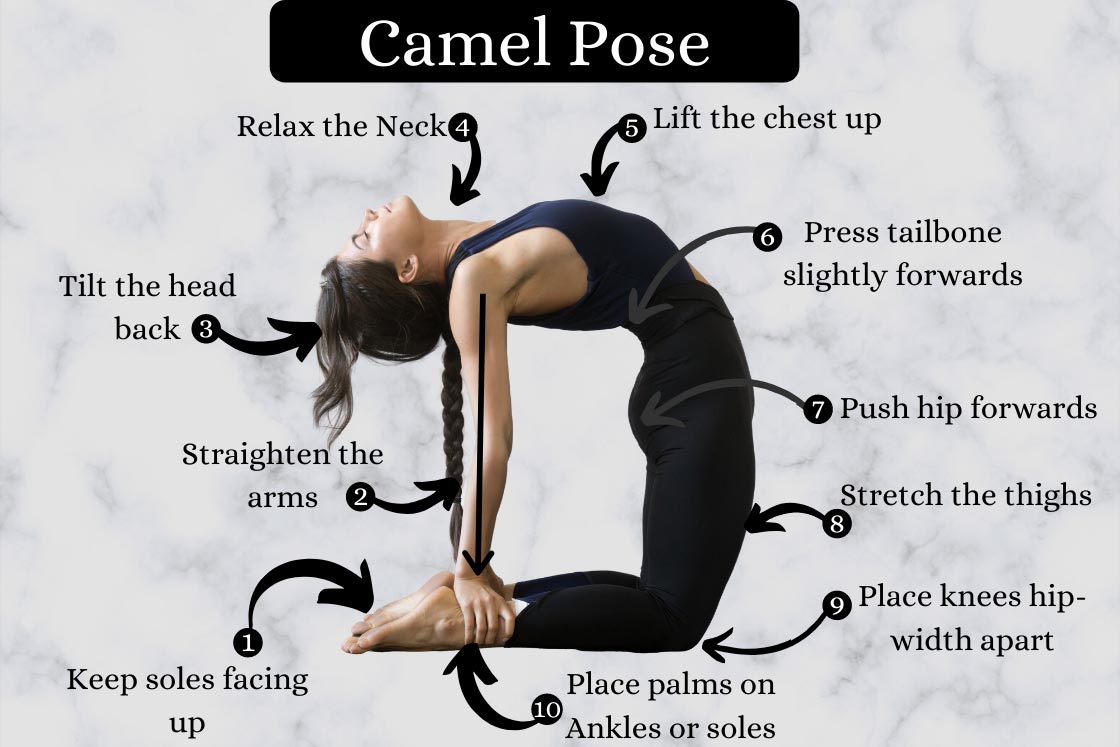
- Kneel on the mat with knees hip-width apart and the tops of the feet flat on the floor.
- Stand tall on your knees, keeping thighs perpendicular to the floor and spine straight.
- Place your palms on the lower back or sacrum with fingers pointing downward.
- Inhale, roll the shoulders back, and open the chest.
- Exhale, push the hips forward, and slowly bend the spine backward from the waist.
- If comfortable, place your hands on the ankles one by one, keeping arms straight.
- Gently tilt the head back if there is no neck discomfort.
- Lift the chest upward and breathe deeply.
- Hold the pose for 30–60 seconds or 5–8 slow breaths.
- To release, inhale, bring hands back to the lower back, lift the torso slowly, and return upright.
Beginner’s tips for camel pose
- If placing the tops of the feet flat on the floor feels difficult, tuck your toes under. This gives support and makes it easier to reach the ankles.
- Place a folded blanket under the knees for comfort and knee support.
- Use yoga blocks next to your feet and rest your hands on them to reduce the depth of the backbend.
- Practise near a wall with knees and thighs touching the wall to maintain correct alignment.
- Beginners can take help from a yoga teacher or partner to enter the pose safely.
Precautions and contraindications
- Always practise within your body’s limits. Avoid forcing the backbend, as overstretching can cause injury to the spine or muscles.
- Do not practise Camel Pose if you have a recent or serious injury to the spine, neck, shoulders, hips, knees, thighs, or feet.
- People with severe lower back pain, slipped disc, or spinal conditions should avoid this pose unless guided by a qualified yoga teacher.
- If you have high or low blood pressure, migraine, vertigo, or insomnia, practise with caution or avoid this pose. Deep backbending and dropping the head back can affect blood flow.
- Avoid forcing the neck backward. Keep the head neutral if there is any neck discomfort.
- Practise Ustrasana slowly and with control. Sudden or hurried movements can strain the lower back and knees.
- Beginners should use props or practise under supervision to reduce the risk of injury.
Camel Pose variations
- Half Camel Pose (Ardha Ustrasana): In this variation, one hand reaches the ankle while the other stays on the lower back. It is helpful for beginners and improves balance and spinal awareness.

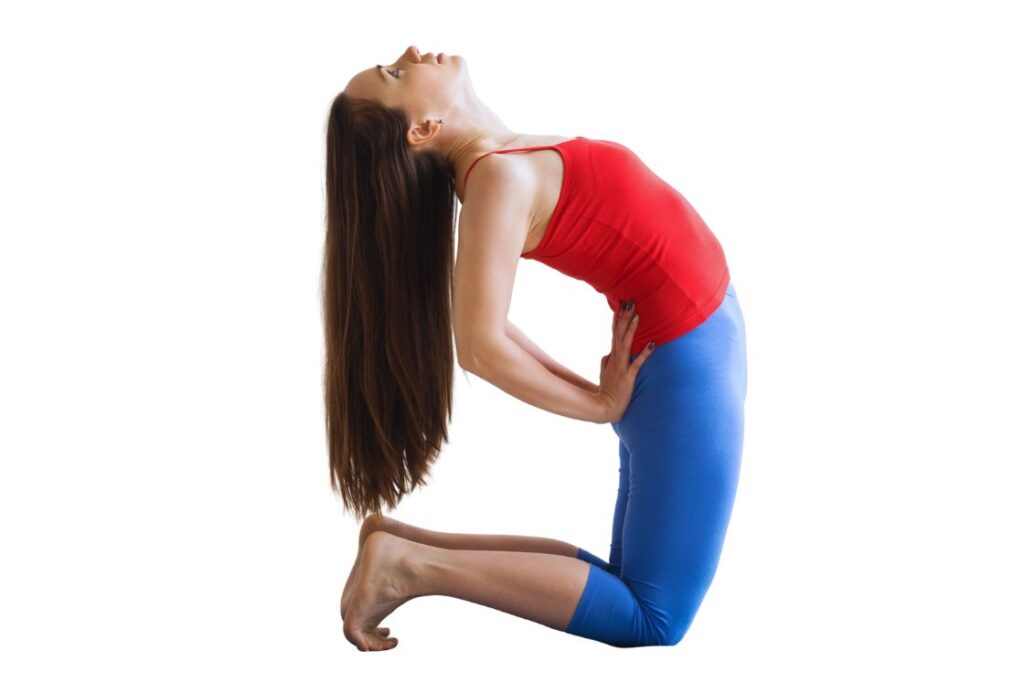
- Camel Pose with Hands on Lower Back: Instead of holding the ankles, keep both hands on the lower back. This reduces strain on the neck and lower spine while still opening the chest.
- Camel Pose with Yoga Blocks: Place yoga blocks next to your feet and rest your hands on them. This shortens the reach and makes the pose more accessible.
- Camel Pose with Toes Tucked: Tuck the toes under instead of keeping the tops of the feet flat. This adds height and makes it easier to reach the ankles.
How camel pose works on the body
Camel Pose works by deeply stretching and activating the front body, while strengthening the spine and supporting muscles. Let us understand how this happens step by step.
When you begin to bend backward, the first stretch is felt in the core and thigh muscles. As the backbend deepens, the stretch moves into the back muscles and spine, improving spinal flexibility.
Keeping the shins and tops of the feet flat on the floor stretches the muscles of the knees, ankles, and feet, while also helping with balance and stability.
As you roll the shoulders back and place the hands on the ankles or soles, the shoulders and arms receive a deep stretch.
When the chest moves forward and upward, the chest muscles and rib cage open fully, supporting better breathing. Gently tilting the head back also stretches the neck muscles.
In this way, Camel Pose stretches multiple muscle groups at once and improves strength, flexibility, posture, and body awareness.
Camel Pose(Ustrasana) benefits
Camel Pose (Ustrasana) supports both the body and mind in a natural way. Regular practice helps improve flexibility, posture, strength, and breathing, while also easing tension and creating a sense of balance and openness.
- Improves digestion: Camel Pose gently massages the abdominal muscles and internal organs like the liver and kidneys. This stimulation helps improve digestion and supports better metabolism.
- Increases flexibility and strength: The pose gives an even stretch to the back, hips, thighs, knees, and core. This improves flexibility while also strengthening these muscles over time.
- Strengthens the shoulders: Ustrasana stretches and tones the shoulder muscles. Regular practice helps increase shoulder strength and improves mobility.
- Opens and strengthens the hips: Camel Pose acts as a deep hip opener by stretching the hip flexors. Strong and open hips provide better support to the spine and improve posture.
- Tones the core and shapes the body: This pose strongly activates the core and abdominal muscles. It helps tone the abdomen and may reduce excess fat around the waist, hips, and thighs.
- Supports pelvic and reproductive health: By releasing tension from the pelvic area, Camel Pose may support reproductive health. It can also help bring balance to menstrual-related discomfort.
- Opens the chest and improves breathing: Ustrasana expands the chest and stretches the chest muscles. This improves lung capacity and supports better breathing.
- Relieves stress and supports the nervous system: The pose increases blood flow to the spine and stimulates the central nervous system. This helps reduce stress, anxiety, and emotional tension.
- Activates the heart chakra: Camel Pose strongly stimulates the Heart Chakra, encouraging feelings of openness, love, and emotional balance. It is also believed to influence the Solar Plexus and Throat Chakras.
Conclusion
Camel Pose (Ustrasana) is practised to open the chest, strengthen the spine, and improve overall flexibility. It stretches the front body, supports better breathing and digestion, and helps correct poor posture. When done mindfully, it also helps release built-up tension and brings a calm, balanced feeling to the body and mind.
Camel Pose (Ustrasana) FAQs
1. Is Camel Pose safe for beginners?
Camel Pose is an intermediate backbend, but beginners can practise it using props like yoga blocks or by keeping hands on the lower back. It should be done slowly and without forcing the posture.
2. Can Camel Pose help with back pain?
Camel Pose can help improve posture and spinal flexibility, which may reduce mild back stiffness. However, people with chronic back pain or disc issues should avoid it or practise only under guidance.
3. How long should Camel Pose be held?
Camel Pose is usually held for 30 to 60 seconds or 5–8 slow breaths, depending on comfort and experience.
4. Should I drop my head back in Camel Pose?
Dropping the head back is optional. If there is any neck strain or dizziness, keep the neck neutral and focus on lifting the chest instead.
5. Can Camel Pose be done during periods?
Some women find Camel Pose helpful for reducing pelvic tension, while others may feel discomfort. It is best to listen to the body and avoid deep backbends during heavy flow days.
6. What should I do after Camel Pose?
It is important to follow Camel Pose with a counter pose like Child’s Pose or a gentle forward bend to relax the spine and balance the backbend.
7. Is Camel Pose good for improving posture?
Yes, Camel Pose helps correct rounded shoulders and slouching by opening the chest and strengthening the back muscles, which supports better posture over time.