By Kristin Feiler, culinary medicine dietitian at Rady Children’s Hospital Orange County (Rady Children’s)
Practical holiday nutrition tips for busy families
December brings celebration, travel, school breaks and shifting routines. For many families, these changes can increase symptoms like constipation, reflux, abdominal pain or picky eating. This guide provides clear, practical strategies that help children feel comfortable and nourished throughout the holiday season.
Support digestion with consistent mealtimes
Holiday schedules often lead to skipped breakfasts, late lunches or grazing. Regular meals every three to four hours support steady energy, predictable bowel patterns and comfortable digestion. Children with sensitive GI systems often feel better with routine and gentle structure around eating.

Build balanced plates
At each meal, include protein, fiber-rich carbohydrates, and fruits or vegetables. This combination slows digestion, supports stable blood sugar, and promotes fullness. Balanced meals are also easier for children to tolerate because they prevent large swings in hunger that can cause overeating or discomfort.
Choose soluble fiber
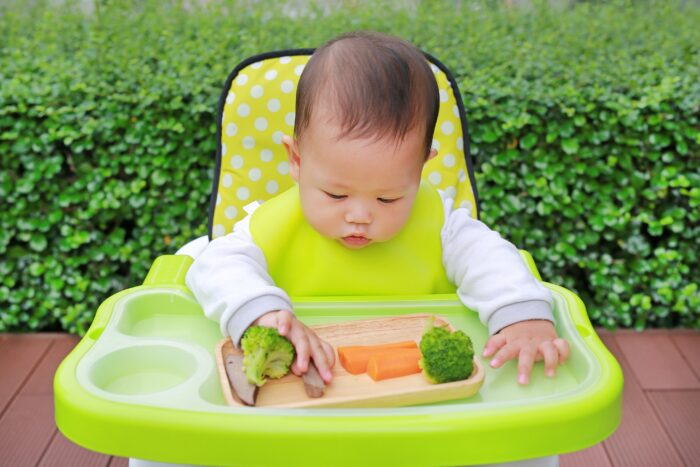
Fiber absorbs water, softens stools, and supports gentle motility. Cooked vegetables, oats, beans, lentils, and soft fruits are excellent options for children who avoid raw vegetables or struggle with digestion. Including one or two fiber-rich foods at each meal helps maintain comfort throughout the season.
Keep hydration a priority
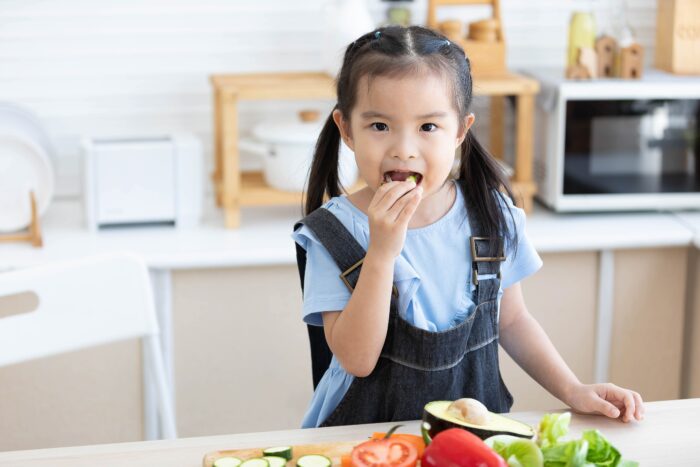
Cold weather reduces thirst signals, and many children drink less in December. Lower hydration can contribute to constipation, headaches, and sluggish digestion. Offer water regularly and include warm options like herbal tea or broth to increase comfort and intake.

Practice slow and mindful eating
Mindful eating helps children tune in to hunger and fullness, take smaller bites and slow their pace. Rapid eating increases discomfort, bloating and reflux. Encourage children to pause during meals, notice flavors and textures, and eat at a calm, steady pace.
Maintain predictable routines
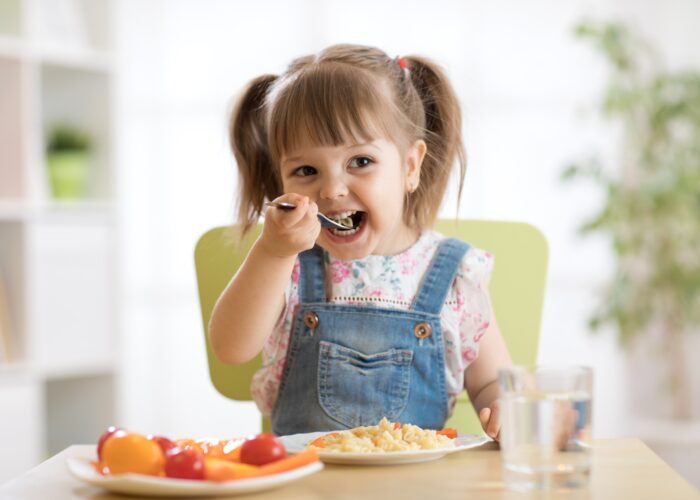
Travel, parties and holiday events can disrupt familiar rhythms. Maintaining regular sleep, meals, snacks and hydration patterns supports digestion and can reduce symptom flares. Even small amounts of consistency make a meaningful difference.
Seasonal recipes for comfort and ease
Check out our recipes in our Culinary Medicine Library for more seasonal ideas and kid-friendly meals that support GI comfort.
- Cinnamon roasted sweet potatoes: These offer soluble fiber and potassium, support stool regularity, and pair well with eggs, chicken, or tofu for a simple winter side.
- Sheet pan chicken and cooked vegetables: Lean protein and cooked vegetables create a balanced plate that supports satiety and comfort. Soft textures help reduce GI stress for children who struggle with raw produce.
- Cranberry orange crumble cups: A warm, festive dessert with holiday flavor that is gentle on pediatric GI systems. This version uses low FODMAP ingredients, keeps portions child-friendly, and provides a soft texture that is easier for many children to tolerate than heavier holiday treats.
- Winter minestrone with gluten-free pasta: Warm broth supports hydration, and cooked vegetables provide gentle fiber. Beans supply resistant starch, which supports gut health and gut barrier function, and plant-based protein that supports consistent digestion.
Holiday nutrition tips to support caregivers and help children thrive
For caregivers, the holiday season can be busy and emotionally full. The most helpful nutrition strategies are simple and consistent. Offer regular meals and snacks, make hydration easy, keep vegetables soft and cooked, and use calm language at the table. Let children participate in basic kitchen tasks to build confidence and connection. Together, these practical holiday nutrition tips create a supportive environment that helps children feel their best throughout the season.
Get more expert health advice delivered to your inbox monthly by subscribing to the KidsHealth newsletter here.
Learn more about CHOC’s Clinical Nutrition Program
At CHOC, we specialize in providing a full continuum of pediatric nutrition services, including inpatient and outpatient services, depending on our patients’ needs.
Further reading
Thapar N, Benninga MA, Crowell MD, et al. Paediatric functional abdominal pain disorders. Nat Rev Dis Primers. 2020;6(1):89. doi:10.1038/s41572-020-00222-5.
van Tilburg MAL, Felix CT. Diet and functional abdominal pain in children and adolescents. J Pediatr Gastroenterol Nutr. 2013;57(2):141-148. doi:10.1097/MPG.0b013e31829ae5c5.
Tuck CJ, Barrett JS. Re-challenging FODMAPs: the low FODMAP diet phase two. J Gastroenterol Hepatol. 2017;32(S1):11-15. doi:10.1111/jgh.13687.
Chumpitazi BP. Update on dietary management of childhood functional abdominal pain disorders. Gastroenterol Clin North Am. 2018;47(4):715-726. doi:10.1016/j.gtc.2018.07.001.
Reynolds A, Mann J, Cummings J, et al. Carbohydrate quality and human health: a systematic review and meta-analysis. Lancet. 2019;393(10170):434-445. doi:10.1016/S0140-6736(18)31809-9.
Sperber AD, Bangdiwala SI, Drossman DA, et al. Worldwide prevalence and burden of functional gastrointestinal disorders. Gastroenterology. 2021;160(1):99-114.e3. doi:10.1053/j.gastro.2020.04.014.