What is osteoporosis?
Osteoporosis is a disease that weakens your bones.
8 million women in the U.S. have osteoporosis. 1 in 4 women over age 65 have the disease.
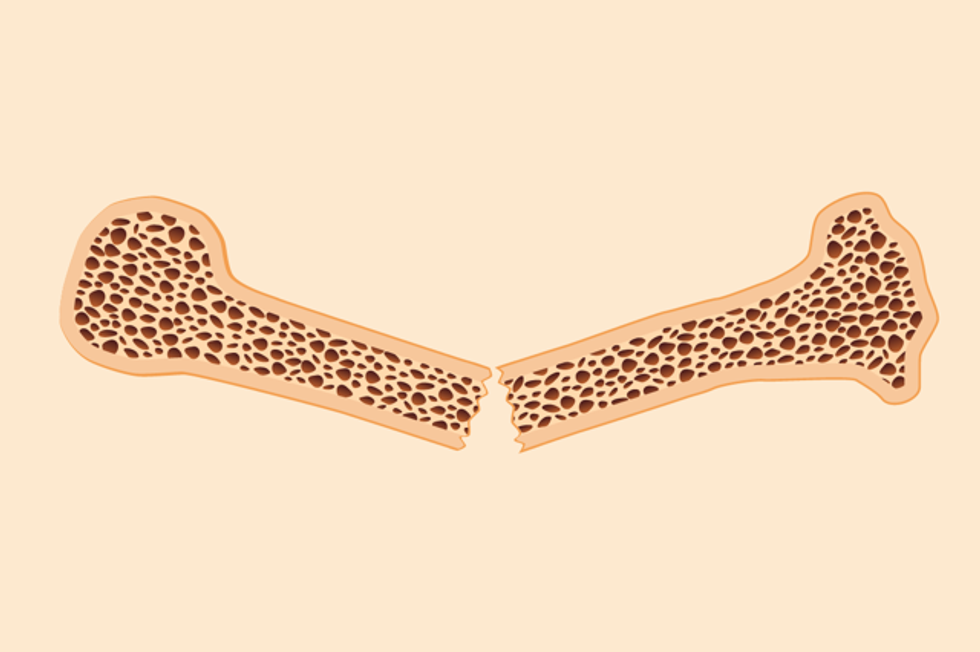
“Osteo” means bone, and “osteoporosis” means porous bone. If you have osteoporosis, the natural holes in the bones get bigger, making them weaker.
Non-Hispanic white women and Asian women are at highest risk.
Osteoporosis is a silent disease
Osteoporosis sneaks up on you. You might only find out after you break a bone, but speak to your healthcare provider if you notice that you’re shorter than you used to be or you’re getting a hump in your back.
People with advanced osteoporosis have such fragile bones, they can break a bone with a minor fall or even a bad cough.
What increases your risk of developing osteoporosis?
-
Age (bone mass naturally decreases over time)
-
Slim body size, thin bones
-
If one parent had osteoporosis or broke a hip
-
Diet:
-
Certain medications:
-
Some medical conditions, such as:
-
Hormone disorders
-
GI diseases
-
Certain types of cancer
-
HIV/AIDS
-
Anorexia nervosa
-
Not being physically active
-
Smoking
Diagnosis
Osteoporosis is diagnosed with a bone mineral density test called a dual energy X-ray absorptiometry (DEXA) scan.
Treatment options for osteoporosis
There’s no cure for osteoporosis, but treatment can slow bone loss or help increase bone density.
Antiresorptive treatment
Bisphosphonates
-
Alendronate
-
Risedronate
-
Zoledronic acid
-
Denosumab
Raloxifene
Estrogen therapy
Anabolic therapy
Teriparatide
Abaloparatide
Romosozumab
Vitamin D
Calcium supplements
Lifestyle changes may reduce osteoporosis risk or slow down bone loss
Diet
Avoid smoking
Limit alcohol use
Exercise
Weight-bearing and resistance exercises can help rebuild bone density, and balance exercises help you reduce the risk of falling.
-
Resistance exercises
-
Lifting weights
-
Using resistance bands
-
Squats
-
Leg raises
-
Rowing
-
Standing on your tiptoes
-
Standing on one leg
-
Tai chi
Preventing falls
You can take steps to prevent falls, reducing your risk of a break.
-
Secure rugs
-
Improve lighting
-
Add grab bars in the bathroom and on stairs
-
Use non-slip surfaces, like rubber mats
-
Remove clutter from floors
This educational resource was created with support from Radius Health.